Saturday, 10 November 2018

Youth Festival 2018 : Aishvaryam

         During 26-28 October,2018, we had Youth Festival in MKBU. Which was hosted by the Takshashila College. Time and again these kinds of academic functions must should be organized. Because it is the stage which helps in displaying the hidden talents. And most of the students take these opportunities as a career changing. In a way these all things influenced a lot in future. 


    In these three days our task was to observed all the things from various approaches. 

   In these three days I have attended total three main events, like Mono Acting, One act play and On the spot Painting. 

  •  Mono Acting : In mono acting I have watched  three performance. Which was mainly based on the theme of women struggle in male dominant society. The second performance was quite good because it was reminded me the theory of Feminism. And Third one was excellent too,  in which she performed the role of lady hawker. How to be self dependent and  how to live the life on our own that was the theme of that performance. She acted very well by using the appropriate language and jesture. 


 • One Act play :  Now a days we sees in cinemas that acting is taking the place of action. So it means acting is becoming difficult for the actors. But in Youth Festival they all performed their role very well. I have watched total three plays. First was "Bhrigu Samhita." Mainly all plays were representing the theme of tragedy. In that I find the theme element of catharsis and hamartia. Second one was " Sikkani triji baju " Which was performed by my Department. ( Dept.of English ) Which was based on Third gender issues. It was a satire on society. How society becomes the reason of sorrow. The third one was " Papan Vachche Dariyo." That was based on a domestic violence. 

  • On the spot Painting : I was also the participants of this event.  The subjects of painting were " Indian Festivals" , " Market"
and " Lokmelo." Most of the painting were based on current issues. Some of the rangolis were very good. 
   

     On the last day I have also attended the closing ceremony. It was a winning hat trick by the SSCCM.  So overall it was great experience to be there. 
      In the last I would like to say that however " Australia was good but their dominance also came to it's end. We can hope that New Countries will change the era as India has changed the era. "


   Thank you .. 

Thinking Activity : Waiting for Godot by Samuel Beckett

          Most of the time thinking becomes difficult and as a result of it one can not go deeper into the foundation. So to cultivate the habit of imagination/ thinking we got this task. This task is based on Waiting for Godot. For further details click here.... 


 • What connection do you see in the setting("A country road. A tree. Evening.) of the play and these paintings.


      This is the painting from which Beckett got the idea of arranging the setting of the play. This painting is drawn by Caspar David Friedrich. Here longing is connected with waiting and two persons keeps on seeing the sunrise and sunset same as in the play. 

   •   The tree is the only important 'thing' in the setting. What is the importance of tree in both acts? Why does Beckett grow a few leaves in Act 2 on the barren tree- The tree has four or five leaves?


     If we read the tree as a symbol then we can say that it stands for both hope and despair. Here we can interpret that after the WW -2 whole scene looks barren but change must take place and as a result of it we can find that leaves. Same way in life nobody will come to rescue us, for the survival we must should be adaptive. 

   • In both acts, evening falls into night and moon rises. How would you like to interpret this 'Coming for night and moon' when actually they are Waiting For Godot?


      As moon never stop rising,  same way people shouldn't be frustrated by their daily life.

  
  • The director feels the setting with some debris. Can you read any meaning in the contours of debris in the setting of the play?


    Here we can interpret debris as a materialistic things,  which not going to be permanent. We can connect this things with human lives too,  by saying that humanities are dying like things. 

   •  The play begins with the dialogue "Nothing to be done". how does the theme of 'nothingness' recurs in the play? 


    Ultimately nothing happens in the play. These both tramps wait for somebody whom they don't know. And in that process they do nothing. But according to me nothing to be done means lots of things to be done if person wants to do. 

   •   Do you agree: "The play (Waiting for Godot), we agreed, was a positive play, not negative, not pessimistic. As I saw it, with my blood and skin and eyes, the philosophy is: 'No matter what- atom bombs, hydrogen bombs, anything- life goes on. You can kill yourself, but you can't kill life."(E.G. Marshal who played Vladimir in original Broadway production 1950s)?

      Yes I am totally agree with the Marshal's view. Mostly we keep on thinking about the destination but if you work hard in the process then automatically the destination will be better. Another interpretation comes in our mind is that nobody's gonna be come to rescue us. One shouldn't be feel frustrated because it is the life. 

 • How are the props like hat and boots used in the play? What is the symbolical significance of these props?

    Beckett has presented all the symbols very well. In the symbol of hat we can connect intellectuality. And boots as a dumbness of person. Or we can say carefree spirit with valid reason as Estragon represents in the play. 


   • Do you think that the obedience of Lucky is extremely irritating and Nauseatic? Even when the master Pozzo is blind, he obediently hands the whip in his hand. Do you think that such a capacity of slavishness is unbelievable?


     Yes, it seems dumbness of lucky. He remains free after Pozzo gets blind. But yet he remains in the position of slave. This thing we can connect with the people like so many time people are habituated to live dependent life. They can't do anything without the string. In general person never find chain around him while there are so many chains which drives person. 

 • Who according to you is Godot? God? An object of desire? Death? Goal? Success? or...

    In the play we can say that God is Godot. But according to me the deep desire to be something,  to achieve more and more in life. In between so many obstacles will keeps coming but we don't have to stop. That's the thing which makes this play positive. 

 • "The subject of the play is not Godot but 'waiting' (Esslin, A search for the self). Do you agree? How can you justify your answer?

       Yes, the subject of the play is not Godot but waiting. I am agree with the Esslin's view. During whole play nothing happens. Which shows the absurdity of life. In life also we keeps on waiting for something till our death. 

   • Do you think plays like this can better be 'read' than 'viewed' as it requires a lot of thinking on the part of readers, while viewing, the torrent of dialogues does not give ample time and space to 'think'? Or is it that the audio- visuals help in better understanding of the play?

       If we talk in terms of thinking then obviously reading will be more helpful. But for an understanding, how nothingness seems in movie, for that watching of movie also helps a lot. 

 •  Which of the following sequence you liked the most:

     o   Vladimir – Estragon killing time in questions and conversations whilewaiting
Vladimir and Estragon: The Had and the Boot

o   Pozzo – Lucky episode in both acts
o   Converstion of Vladimir with the boy

I liked the conversation between Vladimir and Estragon : 

   Because during their talk we find that how Vladimir seems fool by representing the hat, where's Estragon who seems dumb but his arguments are more valid and rational compare to Vladimir. Altogether another interpretation comes in our mind is that both the character represents the human lives. Like those who think too much they suffers more compared to those who remains more passive. 

 •   Did you feel the effect of existential crisis or meaninglessness of human existence in the irrational and indifference Universe during screening of the movie? Where and when exactly that feeling was felt, if ever it was?

    Yes,  we can feel the effect of existential crisis or meaninglessness of human existence in irrational and indifference Universe during screening of the movie. The first sentence it self suggests the meaninglessness of the life. These both traps thinks of suicide, allusions by boy,  hidden chains in life as lucky can't escape from the slavery.

 • Vladimir and Estragon talks about ‘hanging’ themselves and commit suicide, but they do not do so. How do you read this idea of suicide in Existentialism?

     We can connect this things with escapism. An escapism from the struggle. But they doesn't suicides means they have capability to survive. Same way in life so many time we questions on our existence, most of the time whenever we stucks in trap that time we feels of doing suicide. So it is like escapism. Thus, as in Christianity suicide is considered as a sin same way these both tramps avoids the suicide and starts waiting as a doing the karma in difficulty. 

 •  Can we do any political reading of the play if we see European nations represented by the 'names' of the characters (Vladimir - Russia; Estragon - France; Pozzo - Italy and Lucky - England)? What interpretation can be inferred from the play written just after World War II? Which country stands for 'Godot'?

   So far as Pozzo and Lucky [master and slave] are concerned, we have to remember that Beckett was a disciple of Joyce and that Joyce hated England. Beckett meant Pozzo to be England, and Lucky to be Ireland." (Bert Lahr who played Estragon in Broadway production). Does this reading make any sense? Why? How? What?

      Yes, going with the names of  characters we can do political reading of the play. Here Vladimir stand for Russia, Pozzo stand for Italy, Lucky stand for England and Estragon stand for France. For the Godot's character we can say Germany through the Hitler who has barren the land in WW. In the case of Pozzo and Lucky, we can connect them as master - slave , Here Pozzo represents England and Lucky represents Ireland. 


  •   The more the things change, the more it remains similar. There seems to have no change in Act I and Act II of the play. Even the conversation between Vladimir and the Boy sounds almost similar. But there is one major change. In Act I, in reply to Boy;s question, Vladimir says: 

     "BOY: What am I to tell Mr. Godot, Sir?
VLADIMIR: 
 Tell him . . . (he hesitates) . . . tell him you saw us. (Pause.) You did see us, didn't you?
How does this conversation go in Act II? Is there any change in seeming similar situation and conversation? If so, what is it? What does it signify?

   In most of the acts we doesn't find any difference. But yes in above mentioned context we can see the difference. Here Vladimir becomes more self centered.  As in life most of the time people stays with us but when they thinks that their motives are not are near that time they leaves us. 

                                        Thank you...  

Friday, 9 November 2018

Guest lecture by Prof. Balaji Ranganathan

       During 14-16 September, 2018, we had three days guest lecture of Dr. Balaji Ranganathan at Department of English, MKBU. In these three days he dealt with the paper of Postcolonialism. Right now he serves as a Ph.d guide in CUG. To get more details related to him click here.... 


      First he discussed about BLACK SKIN WHITE MASK.  In which he tried to give well explanation of all eight chapters including the conclusion of Frantz Fanon. Meanwhile we came to know about his historical knowledge. Furthermore he talked about how white has fear of black, black craves to be white, language of white and black, desire never sees color and etc. 
        Secondly he talked about ORIENTALISM. How western countries sees middle east, how popular culture represents middle east, history of Palestine, and etc. In short we can say that they all presents things by their preconceived notion. 

          After that he explored his views on A TEMPEST and THE TEMPEST.  How A Tempest is different from The Tempest,  how Shakespeare's work helped in Postcolonial studies,  how Aime Cesaire's re-writing leads the attention of scholars and   Albert Camus Rebel with the character calls Caliban. 
         Furthermore he talked about IMAGINARY HOMELANDS. In that he threw more light on diaspora,  ideas of nation and state, how people a like Rushdie has to suffer and much more. 


Teaching style : 

     It was a great experience to study under his guidance. His knowledge over each subject, fluent English,  frank personality is noticeable things. At last he gave some important information about the preparation for GSET/NET. Where he introduced new method of cracking the exams. And yes, honestly our lack of reading made him little bit concerned because one need original reading to crack these types of major exams. But yes he invited or we can say insisted us to study further. In a nutshell I would like to thanks Dr.  Dilip Barad Sir for arranging these kinds of guest lectures. 
                       
                                    Thank you... 


Shashi Tharoor's views : For reparation from British Raj


      Here we can see the backlash from Shashi Tharoor. Because Britishers considers them selves as a civilized person. But they forgot that what they have done in past for their selfish motives. In the reply Shashi Tharoor asks British youth that have you studied the real history or a power centric.. ? 


1-  Ruined the business of  textiles : 
   
     By giving the example of textiles Tharoor tries to underline an issue. Britishers have cutted the thumbs of the workers. And they just taken all the things with lower amount. 

2-  Brutality by Britishers : 

      For their selfish motives they have used the violence to kill people.  Even they looted poor harshly and as a result of it many people died because of starvation. 

3- Facilities for themselves : 

    So many time we hears the question that during colonial period britishers established so many new things in India. Like  roads, railways, schools and etc. But all these things were for their comfort. 

      Thus ,we can say that Tharoor's arguments makes good sense regarding the reparation. Because India was reach before the arrival of British. And without the Britishers India can progress. 

                                                     Thank you... 

Thursday, 8 November 2018

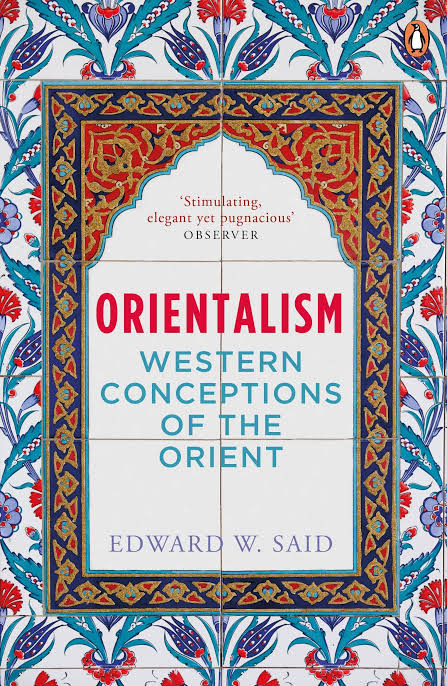
Orientalism by Edward Said


    In this task students have to give five concepts which he/she liked from the Edward Said's interview on Orientalism. For further information related to the task click here....


       By listening the interview we came to know about the widened definition of Orientalism. In Said's words it is not sheer study of middle east but with that it has provided the other knowledge too. Like postcolonial studies and history and anthropology etc. 

1- Tries  to give real history : 

        When we read the introduction that time we finds that he felt dislike about the representation of Arab and from that he got inspired to write real history. Because Arabs were represented as a rigid people. But by giving the example of Arab-Israeli war of 1973 he has tried to prove his point. And another thing is how outer person's notion remains wrong about his own land that he tries to convince by giving the references of Ang and Gerome. 

2- Predictable : 

      In this context we can say that how western countries sees middle east. They have already been conceived their mind set by describing east as a terrorist groups. 

3-  Foreign Policy of western countries : 

      Here Said describes the different motives of France, America and Europe towards the colonies. French imperialism was very different than Europe and America. Further he said that French did not invaded like Spaniard invaded the new world, looking for a loot. But Nepolian invaded Egypt for the survey of Egypt while Europe invaded the new world looking for loot. 

4- In Popular Culture : 

     Whenever we watch movies based on war that time  we finds the representation of Arab in more negative way. Most of the time western countries tries to represent middle east as a cruel things without any investigation. 

5- Contrapuntal View :  

         In the end Said says that everyone has something good or bad. But by putting our own side on higher position one can not react negatively towards other. And mainly all people are not supposed to be bad and if you think like that way by preconceived notion then whites are also violent. So one should not think as same as other think. 

                                         Thank you...  
       

Wednesday, 7 November 2018

Review of the movies : The Reluctant Fundamentalist & Midnight's Children

   This task has been given to the students to study Postcolonial elements in the movie. For more details about the given task click here... 

         The Reluctant Fundamentalist


      It is a 2012 political thriller drama film based on the 2007 novel, The Reluctant Fundamentalist byMohsin Hamid, directed by Mira Nair, starring Riz Ahmed and Kate Hudson in lead.[4] The Reluctant Fundamentalist is a post-9/11film, a movie about the impact on one man of the Al Qaida attacks and the American reaction to them. ( Wikipedia)

    The story starts with an interview. The American CIA agent Bobby Lincoln gives an interview for the abduction of American Professor in Lahore. Bob was Taking interview of Changez Khan in the Coffee cafe in Lahor that he may be involved in this abduction or in the matter of 9/11. Here Mira Nair interestingly used the flashback technique which was move us from Pakistan to America in eye opening way. The title of the movie give us two different views one is that fundamentalist in terrorism and other business fundamentalist.


       The film starts with an interview of Changez Khan By Bobby in which Changez Khan narrates his story about his life in America. The hero of the novel was very young, intellectual, businessman and highly reputed. There he was living a good life with his beloved Erica, a very good artist in photography. But suddenly all the things changed  with Changez after the attack on WTC tower. All people look towards him like he is terrorist, he insulted by FBI and many American fellows and abused him. Once, he loved America like his native land but after abusing and insulted her sincerity he came back to Pakistan and starts delivering lectures in University. 
      But this American agent blames him that you are teaching terrorism in university, which was not the truth.He lost his innocent fellow by the fire of American Agent then CIA agents realized that they have done mistake and killed innocent man. But at the end of the movie Changez wants to freedom from Mujahid and America's business culture and he wants to live a meaningful and simple life with the happiness of family. 
      In this movie we finds avery good use of narrative technique like flashback technique to make movie very interesting, and also used very good camera focus when we see the scene of attack on WTC tower when camera on the face of Changez rather on live telecast, to know the expression of Changez towards it. Also a very good meaningful background musics are there to convey the nonverbal ideas.  So in a nutshell we can say that movie has tremendous effect on audience. Because what people were not able to see that this movie has tried to represent. 

        While trying to see the Postcolonial elements in the movie we came to know that how western countries sees the Muslims and especially Pakistani. Mostly Americans view over them is much problematic. But no one can raise the question against the power. And that same thing we can see in this movie. 
    
                          Midnight's Children 


       Midnight's Children is a 2012 Canadian-British film adaptation of Salman Rushdie's 1981 novel of the same name. The film features an ensemble cast of Satya Bhabha, Shriya Saran, Siddharth Narayan, Ronit Roy, Anupam Kher, Shabana Azmi, Kulbhushan Kharbanda, Seema Biswas, Shahana Goswami, Samrat Chakrabarti, Rahul Bose, Soha Ali Khan, Anita Majumdar and Darsheel Safary. With a screenplay by Rushdie and directed by Deepa Mehta,[3] the film began principal photography in Colombo, Sri Lanka in February 2011 and wrapped in May 2011. Shooting was kept a secret as Mehta feared protests by Islamic fundamentalist groups.( Wikipedia) 


            The film starts with the year 1917, the birth year of Indira Gandhi and end with the emergency or we can say that the last stage of Indira Gandhi's Life. So, some may have question that why the protagonist of the film narrated the the history before the thirty years when he was not in her mother's womb? Well, I don't know why Rushdie connected Indira Gandhi's era throughout the film, we must read the novel to understand the connection. The story about the Children who were born in the stroke of the midnight 15th august 1947 with the magical power, in which two major character like Saleem Sinai, the protagonist belong to reach family while the Shiva who was born in poor family later joined the Army and fought in the battle with Pakistan to free Bangladesh.

        The main idea of hybridity in culture and identity we can see in the movie, as per the quote 'Let reach to be poor and poor to be reach' Saleem, actually, the son of British man William Methwold and poor Marathian lady and the Shiva was the son of Ahemad Sinai and Amina, but, Mary, a nurse in the hospital changed these both baby boy with each other because her lover was a Marxist and pursued mary to protest against an elite groups. 
          While moving further we finds that Saleem went to pakistan and Shiva Joined Indian Army, so here we can see the partition of India and pakistan. later on, After the war, Saleem came to India, his mother land and marry with Parvati, beloved of Shiva and she gave birth to baby boy who was the son of shiva so, we again see the hybridity. And also we can see the culture of India like snake Charmer. Thus,  movie ends with the diverse range of interpretations. And film maker has tried to represent real India through the technical aspects. 

        Postcolonial studies : 


Hybridity : Mixing of two  - Saleem is the perfect example of hybrid man, who was the son of colonizer and poor Indian lady and also the other character, Shiva was another example of hybrid man who was the son of Muslim parents.

Miscegenation : In simple words we can say  that a relationship between different races. In the movie we can find the sexual relation between White colonizer Methwold with black skin Indian Poor lady and another sexual relationship with white Saleem with black skinned Parvati. Which highlights the themes of  the book Black Skin White Mask. 

Magic Realism :  Here this term referred as to show India as a country of Snake Charmer. In the movie it is used as a plot moving theme too. But has significant meaning. Same way in movie we finds Saleem has power of sense of smell to feeling the different things and people whereas Parvati also has power like Abrakadabra to hide people or things in the trug.  
     
                       Thus, we can say that these both movies has widened our mind by showing the real India, how western countries sees us. And ultimately it throws more light on Postcolonialism.   

                                                 Thank you...